First Exercise: Stepping into someone else’s shoes
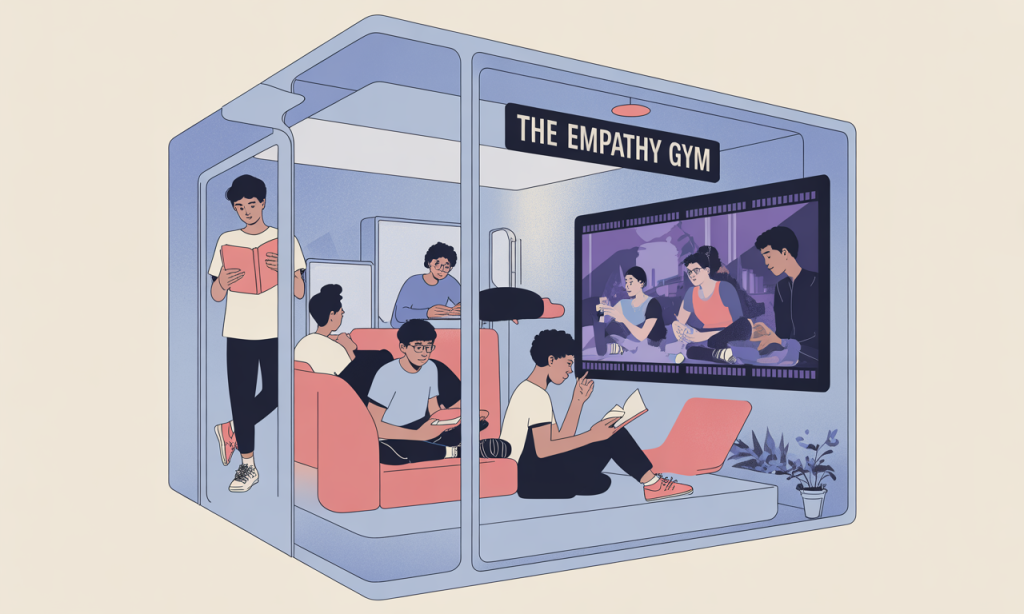
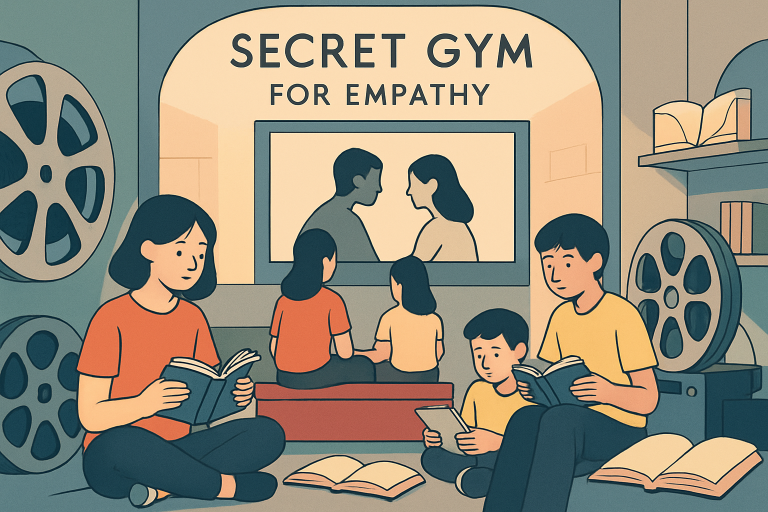
Stories invite us to step into the shoes of characters and see the world through their eyes. We live the victories of a hero, but also the fears of a side character or the insecurities of a complex protagonist. When J.D. Salinger has the young Holden ask where the ducks in Central Park go when the lake freezes over, he’s not just sharing an anecdote. He’s making us feel his own anxiety for small, vulnerable things, an empathy for vulnerable creatures. This is the basic training: learning to see the world with different eyes.
Second exercise: Training social-emotional intelligence
Narratives are an endless catalog of human emotions. Anger, joy, sadness, surprise, fear, disgust—we see them portrayed, we feel them build, and we understand what triggers them. This helps us name what we feel and recognize the same emotions in others. We become better at reading people, understanding their reactions, and responding with more awareness and solidarity. It’s a real boost to our social-emotional intelligence.
Third Exercise (Advanced): Looking Beyond the ‘Villain’
This is the most challenging and powerful.
Why do we feel a glimmer of compassion for a character like the Joker or the tormented Severus Snape?
Because well-crafted stories don’t just show us their wrongful actions; they reveal their wounds, their motivations, and the chain of events that made them who they are. They don’t ask us to justify them, but to understand them. They train us to see the humanity even where it seems absent. If we can do that with a fictional character, perhaps we can learn to do it with the real people we find “difficult” or “wrong.”