Conclusion: Toward an Education with Roots
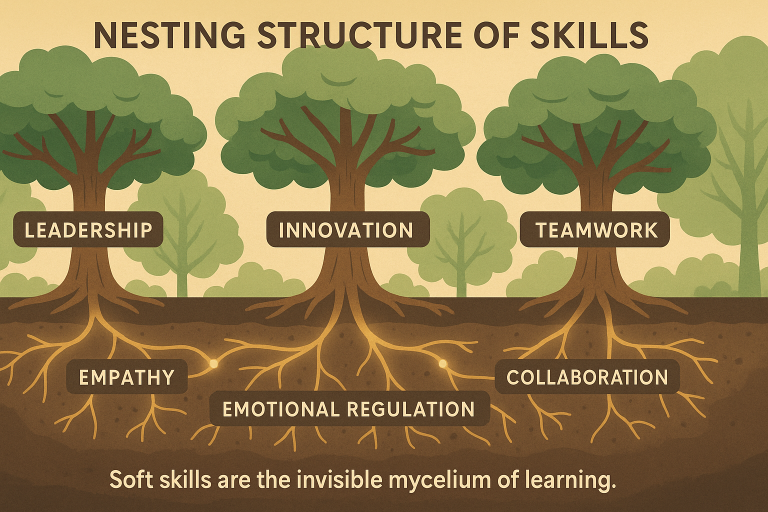
Rethinking education is not only a methodological issue, but an ecological one: it involves restoring balance between the cognitive and the emotional, between performance and relationship, between knowing and feeling. The evidence is clear — without a fertile soil of soft skills, no technical knowledge can be sustained. And without empathy, innovation loses its human meaning.
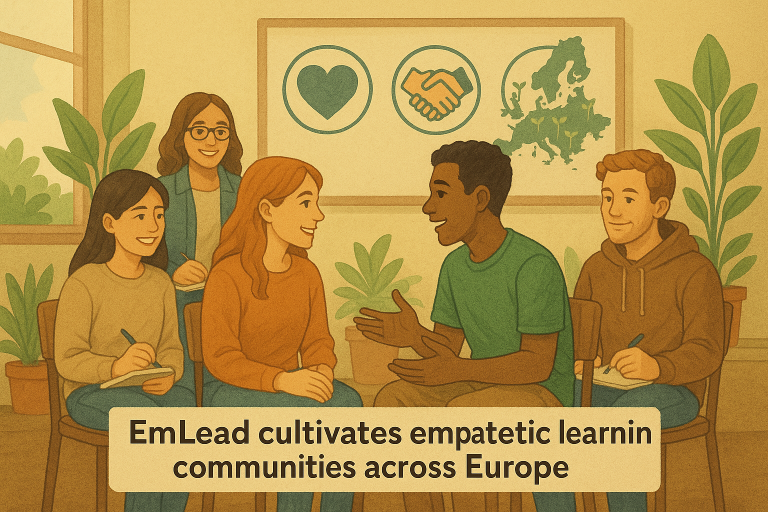
EmLead is positioned in this context as a practical and urgent response. Its value lies not only in the materials it produces, but in the mindset shift it promotes: understanding that leadership is learned by cultivating empathy, not accumulating power.
Every training module, every role-play activity, every shared reflection space plants in young people the capacity to listen, build trust, and make conscious decisions.
Instead of competing, they learn to connect. Instead of reproducing hierarchical models, they learn to create environments where people grow together.
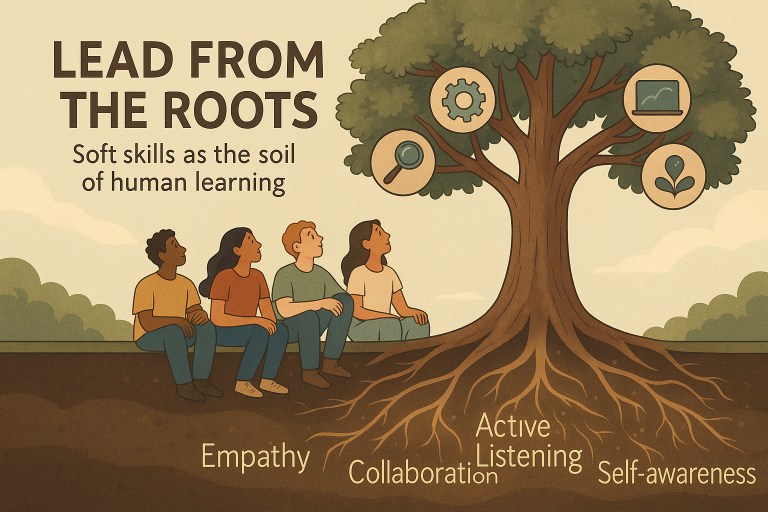
If we want to build a Europe capable of facing future social and technological challenges, we must begin by caring for its educational soil.
And that soil — made of empathy, communication, cooperation, and community spirit — is precisely what EmLead helps regenerate.
“The leadership of tomorrow will not emerge from machines or algorithms,
but from the human ability to understand and care for the roots that sustain us.”