
Small moments that make you an empathetic leader

Author
Minea Kiker
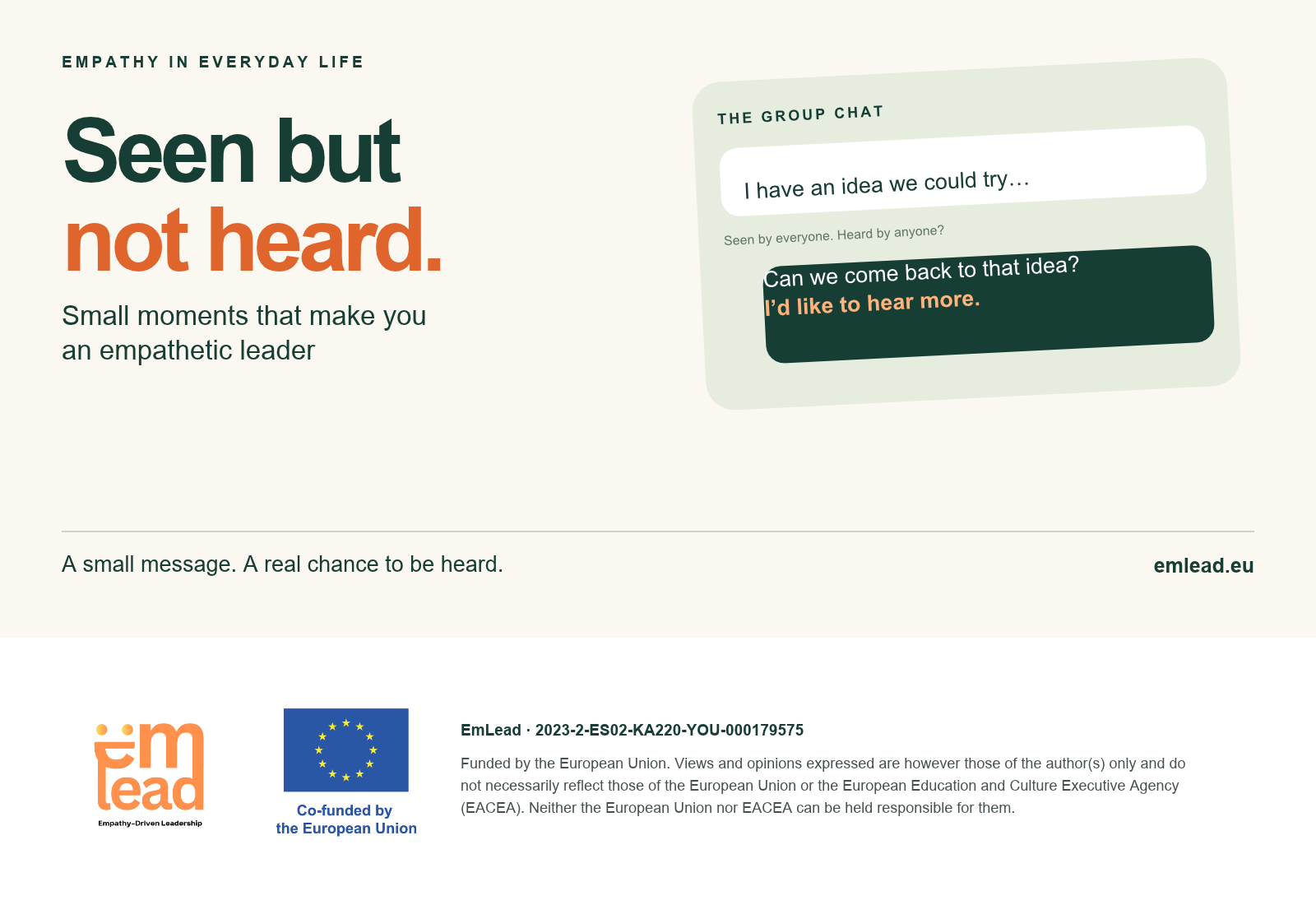
You post an idea in the group chat. Someone reacts with a laughing emoji. Two people start talking about something else. Your suggestion disappears up the screen.
Was the emoji friendly? Were they laughing at you? Did anyone actually read what you wrote?
Now imagine being the person who sent the emoji. You thought the idea was funny in a good way. You were about to reply properly, but your bus arrived.
Same chat. Two very different versions of what happened.
That gap between what we mean and what someone else experiences is a useful place to start thinking about empathy. It is also where you can practise leadership, even if you have never thought of yourself as a leader.
Think about the last time you worked on a school project, organised something with friends or joined a youth activity. Who decided what happened? Who made it easier for others to speak? Who noticed when somebody was being left out?
You influence a group whenever you respond to an idea, share a task or decide whether to join in with a joke. You can also change its direction with a small intervention: “Wait, I think we missed what you were saying.”
This is the kind of everyday leadership that EmLead explores through role-play. The project gives young people opportunities to try out responses to situations involving communication, inclusion and difficult decisions, then reflect on what happened.
It is easy to fill in missing information. A short reply can seem rude. Silence can look like agreement. Someone who keeps interrupting might appear confident, while the person who says very little gets labelled uninterested.
Sometimes our interpretation is right. Sometimes we are missing most of the story.
Empathy starts with leaving room for that possibility. You can notice a change in someone’s behaviour without deciding that you already know the reason. “You went quiet after that message. Do you want to talk?” gives them space to explain, or to say no.
The European Commission’s LifeComp framework connects empathy with understanding other people’s experiences and responding appropriately. It places it alongside communication and collaboration: useful skills whenever we have to figure something out together. European Commission, LifeComp
In everyday life, that can mean asking one more question before sending the reply you wrote while annoyed.
Imagine a role-play in which your group has to plan a small event. Two people have plenty of ideas. One person keeps getting interrupted. Another has a concern about the cost but does not know how to bring it up.
The plan comes together quickly. Everyone nods. Then the scene stops.
Before moving on, the group looks back: Whose ideas shaped the plan? Did everyone have a chance to disagree? What did each person know that the others did not?
Now you try a short part of the scene again. This time, someone asks about costs before choosing an activity. Someone else returns to the interrupted idea. The group gives everyone a minute to write down a suggestion before discussing it.
Would the decision change? Perhaps. You might also discover that an apparently helpful response does not work for everyone. Putting a quiet person on the spot, for example, may make speaking harder.
That is what makes a replay worth trying. You can test a response, ask how it was experienced and adjust it. Nobody needs to deliver a perfect speech or produce the “correct” ending.
What if the problem is more serious than a misunderstood emoji? A joke targets someone’s accent. A teammate dismisses another person’s idea. A friend lashes out because they feel excluded.
You can take their feelings seriously while setting a boundary around their behaviour. You could say: “I get that you’re frustrated. That comment was hurtful. Can we talk about what happened?”
Finding those words in the moment can be difficult. Role-play gives you an opportunity to practise them and hear how they sound to someone else.
You should also have a choice about how you take part. Observing a scene can give you plenty to think about. You can pause or decline a role, and you do not have to share a personal experience to contribute to the discussion.
After a role-play, a few honest questions can be more useful than a quick “That was fun”. Try asking:
Choose something small enough to remember. In the next group chat, check what someone meant before reacting. During a shared task, bring an overlooked suggestion back into the discussion. When you disagree, try explaining the other person’s point fairly before giving your own.
Then notice what happens. Did your question help? Was your timing awkward? Would you try a different approach next time? One activity will not make every difficult conversation easy. It can give you a response to practise and a reason to pay closer attention.
The EmLead learning portal offers role-play scenarios to explore with a youth group, classmates or a facilitator. Pick a situation that feels familiar, try it out and leave time to talk afterwards. You may be surprised by what other people noticed in the very same scene.
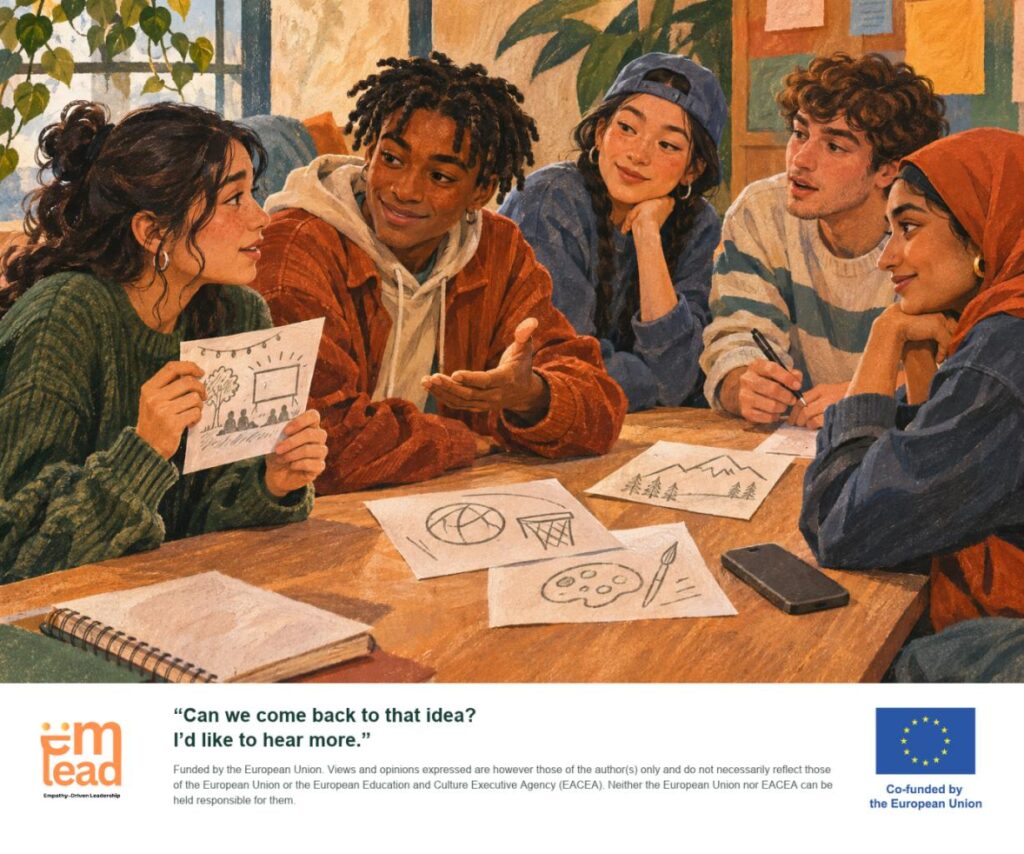
Back in the group chat, your friend’s idea has just disappeared beneath three new messages. You could keep scrolling. Or you could write: “Can we come back to that idea? I’d like to hear more.”
A small message. A real chance for someone to be heard.
EmLead – Empathy-Driven Leadership: A Role-Playing for Gen Z Development
Project number: 2023-2-ES02-KA220-YOU-000179575
Funded by the European Union. Views and opinions expressed are however those of the author(s) only and do not necessarily reflect those of the European Union or the European Education and Culture Executive Agency (EACEA). Neither the European Union nor EACEA can be held responsible for them.