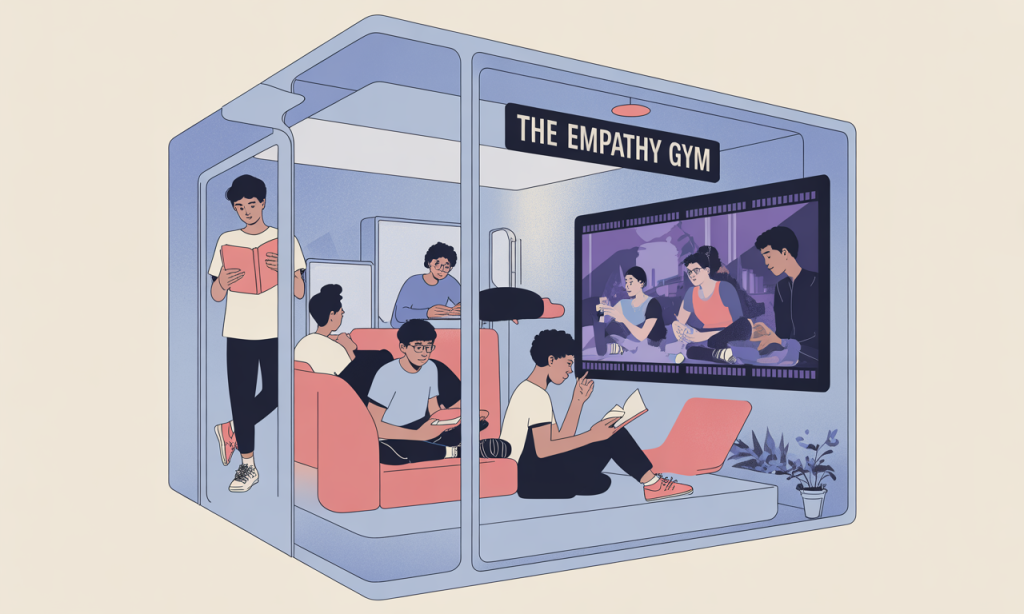
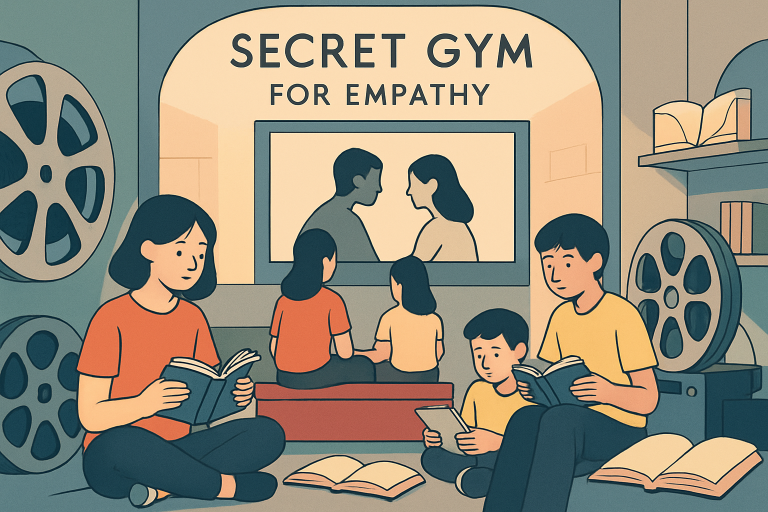
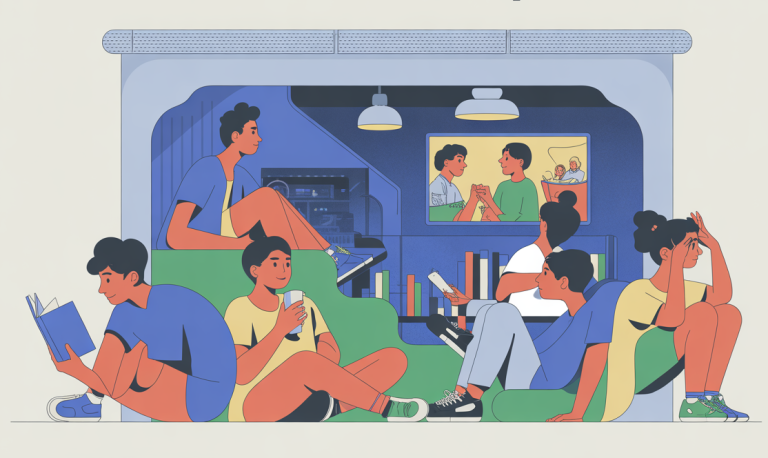
The “secret gym” for Empathy:

How films and books can train youngsters

Author

Irisa Hasani

TDM 2000 ODV

Have you ever been moved by a film character, feeling their anger or joy as if it were your own? Or finished a book and thought, “I completely understand why they did that”? If so, you’ve already experienced one of the most powerful magics of stories: they act as a true  gym for empathy.
In our daily lives, we are often on the defensive. We put up walls, label people based on first impressions, and judge their actions without knowing the “behind-the-scenes” story. It’s a protective mechanism, a way to simplify a complex world.
But when we open a book or press “play,” something changes. We enter a safe space where we can suspend judgment and fully immerse ourselves in someone else’s life. There are no real-world consequences, no need to protect ourselves. In that space, we allow ourselves to do something extraordinary: to feel with others.
Stories as empathy simulators
Think of stories as powerful “simulators” for our emotions. Each narrative offers a different workout for our empathy.

First Exercise: Stepping into someone else’s shoes

Stories invite us to step into the shoes of characters and see the world through their eyes. We live the victories of a hero, but also the fears of a side character or the insecurities of a complex protagonist. When J.D. Salinger has the young Holden ask where the ducks in Central Park go when the lake freezes over, he’s not just sharing an anecdote. He’s making us feel his own anxiety for small, vulnerable things, an empathy for vulnerable creatures. This is the basic training: learning to see the world with different eyes.

Second exercise: Training social-emotional intelligence

Narratives are an endless catalog of human emotions. Anger, joy, sadness, surprise, fear, disgust—we see them portrayed, we feel them build, and we understand what triggers them. This helps us name what we feel and recognize the same emotions in others. We become better at reading people, understanding their reactions, and responding with more awareness and solidarity. It’s a real boost to our social-emotional intelligence.

Third Exercise (Advanced): Looking Beyond the ‘Villain’

This is the most challenging and powerful.
Why do we feel a glimmer of compassion for a character like the Joker or the tormented Severus Snape?
Because well-crafted stories don’t just show us their wrongful actions; they reveal their wounds, their motivations, and the chain of events that made them who they are. They don’t ask us to justify them, but to understand them. They train us to see the humanity even where it seems absent. If we can do that with a fictional character, perhaps we can learn to do it with the real people we find “difficult” or “wrong.”


From fiction to action

There’s even a scientific basis for this:
mirror neurons, the brain cells that fire both when we perform an action and when we see someone else perform it, allow us to ‘feel’ the experiences of others. Stories are powerful fuel for these neurons.
Stories are not just an escape from reality. They are a return to what makes us human. They are where we can train ourselves to be more understanding, more open, and more connected.
So, the next time you open a book or sit down in front of a screen, don’t just think of it as entertainment. You are stepping into your personal empathy gym. And every session makes you a little stronger—not just for yourself, but for everyone you’ll meet in the real world.